 |
| The system's main components |
The system is called the A&A Worm
Farm Waste System (designed and built in Australia) and we are very happy with
it. All waste (bathroom, toilet and kitchen) flows by gravity to a storage
chamber (the worm farm). Solids form a compost heap in the tank and liquids
gradually drain through into the sump. A submersible pump activated by floats takes
a couple of minutes to pump the liquid to the disposal area where the waste is
dispersed underground.
Our plan is to one day run this waste
water through reed beds and then use it to water fruit trees. It is possible on
some sites (in fact desirable) to have the whole system run by gravity. This
would negate the need for a pump, and the only need for power would be to
charge the battery on the alarm system which lets you know if the system is not
working properly.
 |
| The rechargeable alarm |
Over 12 years we have had some large
parties and events and the system has coped well. The solids in the chamber have
reached about the halfway mark and seem to have stabilized at this level. As the
solids are broken down by microbes and worms, small particles get flushed out
with the water.
We see the system’s main advantages
as:-
·
The
waste water can be put to use in orchards or grassy areas
·
Minimal
power use (Almost nil if gravity is used instead of the pump)
·
The
cost of the system is reasonable with no ongoing maintenance contracts (like
some other systems)
·
There
is virtually no odour – even when the access lid is lifted up
·
A
simple design that doesn’t require specific technical knowledge and problems
are easy to diagnose and fix
·
Most
of the time there is no maintenance required at all
·
The
compost chamber allows easy disposal of persistent weeds and other organic matter
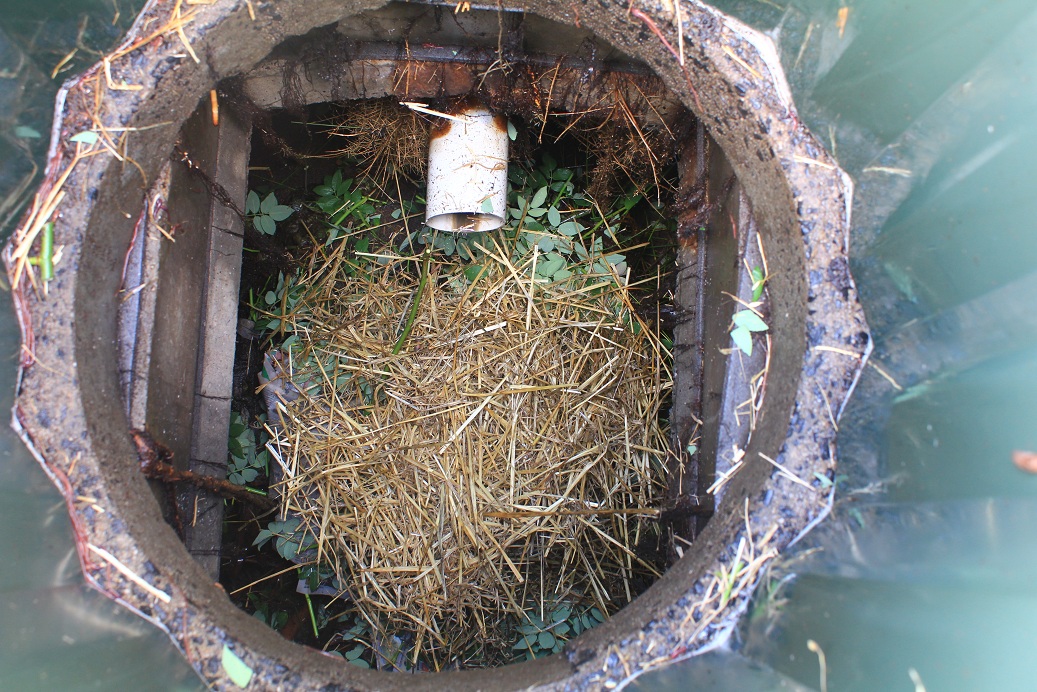 |
| Looks like a compost heap inside! |
How has it performed?
Even though we have had occasional
issues that need attention, we think its performance over the 12 years has been
excellent. During this period it has largely
operated day in and day out without us giving it a second thought.
The issues
that have arisen with the system have mostly been of a minor nature and were
easily fixed.
- Stuck floats. A couple of times the floats that turn the system off and on have become stuck. Usually the solution is to give the sump outflow pipe a shake and this frees them up.
- Build up of sediment. Every year or so we pull the pump out of the sump, wash it down, inspect it and empty any sediment that has built up in the bottom of the sump. The pump is not designed to cope with sediment so this is more of a precautionary measure.
- Pumps have a limited lifespan. Our issue with the pump was detailed in the last post
- Blocked Disposal trenches. This took a bit of effort to solve, but was very site specific. During the drought (years of very dry conditions) the ground surrounding our disposal trenches dried out to such an extent, it had set like concrete, and lost the capacity to absorb water. We would have had the same issue with any system of underground distribution of waste water. In these conditions our soils were just not capable of absorbing the required amounts of waste water quickly enough. We replaced the first few metres of the installed underground distribution channels with Plastic Domed Drain Material which had a much bigger capacity and was capable of holding the waste water long enough for it to be absorbed over a longer period of time.
 |
| Domed drainage added to each absorption trench |
Most of our issues were relatively
easy to solve in retrospect. They were also part of the process of learning about
how the system works, its limitations and maintenance needs. This last point is
part of our basic philosophy – to take responsibility where possible for
growing food, generating power, harvesting rain water and disposing of our own
waste. Life has become one huge learning experience!


